Can This Wine Age? 5 Clues to Look For
Many wine lovers assume that all wines improve with age. In reality, most wines are made to be enjoyed within a few years of release, while only a small percentage are built for long-term cellaring.
So besides knowing how to store wine properly, how can you tell whether a wine has the potential to age gracefully?
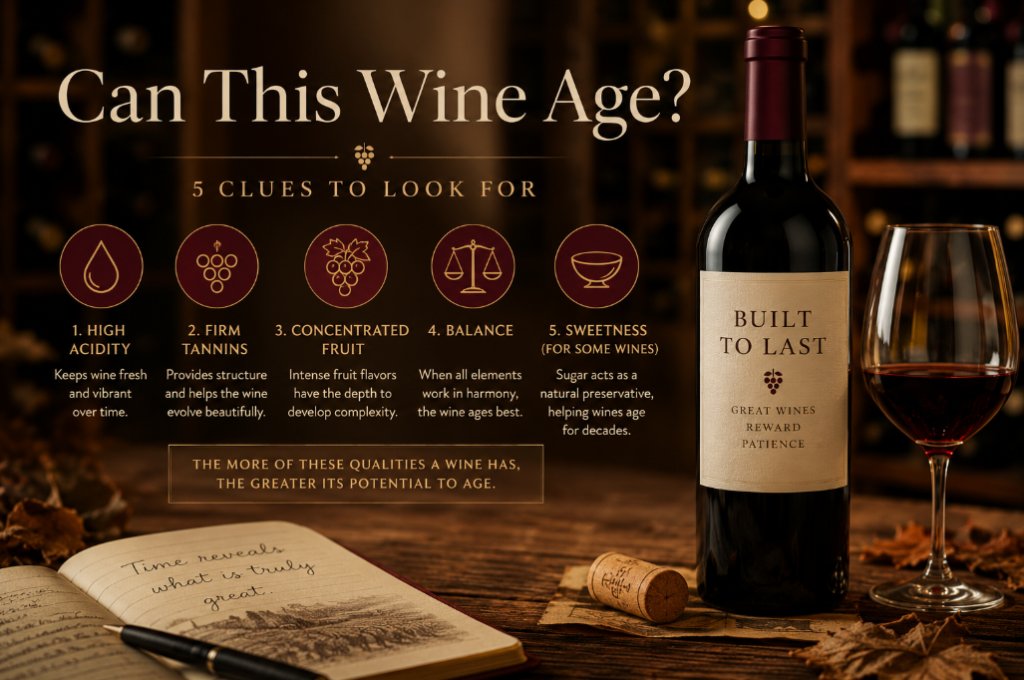
While there is no guaranteed formula, there are five important clues that can help you identify wines that are likely to reward patience.
1. High Acidity
Acidity acts like a natural preservative in wine.
Wines with vibrant acidity tend to stay fresh and lively for many years, allowing their flavors to evolve slowly over time.
Some famous examples include Riesling from Germany, Chardonnay from Burgundy, and Nebbiolo from Barolo.
If a wine feels crisp and refreshing today, it may have the structure needed to age well.
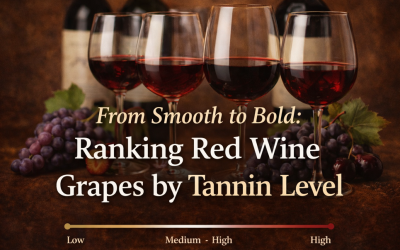
2. Firm Tannins
Tannins are compounds found mainly in grape skins, seeds, and oak barrels. They create that drying sensation on your gums and tongue.
Young wines with firm tannins may seem a little harsh at first, but these tannins soften and integrate as the wine ages.
Classic ageworthy examples include Cabernet Sauvignon, Nebbiolo, and Syrah.
Think of tannins as the skeleton that supports a wine through the years.
3. Concentrated Fruit
A wine needs enough fruit intensity to survive the aging process.
As wines mature, their fresh fruit flavors gradually fade and transform into more complex notes such as leather, tobacco, mushroom, dried flowers, or forest floor.
Without sufficient fruit concentration, a wine may simply lose its character before those secondary aromas have a chance to develop.
4. Balance
This may be the most important clue of all.
A great aging wine is not defined by high acidity, tannins, alcohol, or sweetness alone. Instead, all these elements must be in harmony.
When no single component dominates the wine, it has a much better chance of evolving gracefully over time.
Many wine experts consider balance to be the ultimate indicator of quality and longevity.
5. Sweetness (For Certain Wines)
While most ageworthy wines are dry, sweetness can also act as a powerful preservative.
Some of the longest-living wines in the world are sweet wines, including Sauternes, Tokaji, and German Beerenauslese Rieslings.
The combination of sweetness and acidity allows these wines to develop extraordinary complexity over decades.
The Quick Rule
When evaluating a wine’s aging potential, look for:
✓ High Acidity
✓ Firm Tannins (for red wines)
✓ Concentrated Fruit
✓ Good Balance
✓ Sweetness (for sweet wine styles)
The more of these characteristics a wine possesses, the greater its potential to evolve and improve over time.
Final Thoughts
Not every wine needs to be aged. In fact, many wines are crafted specifically to be enjoyed young, vibrant, and fruit-forward.
But when a wine possesses the right structure, patience can be richly rewarded. Over time, primary fruit aromas can transform into layers of complexity that simply cannot be achieved in a young wine.
The next time you open a bottle, ask yourself:
Can this wine age?
The answer may be hidden in its acidity, tannins, fruit, balance, and sweetness.
And sometimes, the best bottle is the one you haven’t opened yet. 🍷