🍷 Does the Shape of a Wine Glass Matter?
For many wine lovers, the focus is often on the wine itself — the region, the grape varietal, the vintage, and the price. Yet there is another element that quietly influences the entire experience, often overlooked but surprisingly impactful:
👉 the shape of the wine glass.
At first glance, it may seem like a minor detail. After all, wine is wine — does it really matter what glass it is served in?
The answer, quite simply, is yes.
The shape of a wine glass can influence how a wine smells, how it tastes, and ultimately how much you enjoy the experience.
🧠 The Science Behind the Glass
Wine is a sensory experience. What we perceive as “taste” is actually a combination of:
- aroma
- texture
- temperature
- structure
In fact, aroma plays a significant role in how we experience wine. This is where the shape of the glass becomes important.
A well-designed wine glass helps to:
- concentrate aromas
- direct the wine to specific parts of the palate
- enhance the overall balance of flavours
Different wines have different characteristics, and the shape of the glass is designed to highlight those characteristics.
🍇 Why Shape Influences Aroma
When you swirl wine in a glass, you release aromatic compounds. These aromas rise from the surface of the wine and are captured within the bowl of the glass.
A wider bowl allows more oxygen to interact with the wine, helping it “open up” and release more complex aromas.
A narrower opening, on the other hand, helps to concentrate these aromas, directing them towards your nose.
This is why a proper wine glass is designed with:
- a wide bowl
- a tapered rim
It is not just aesthetic — it is functional.
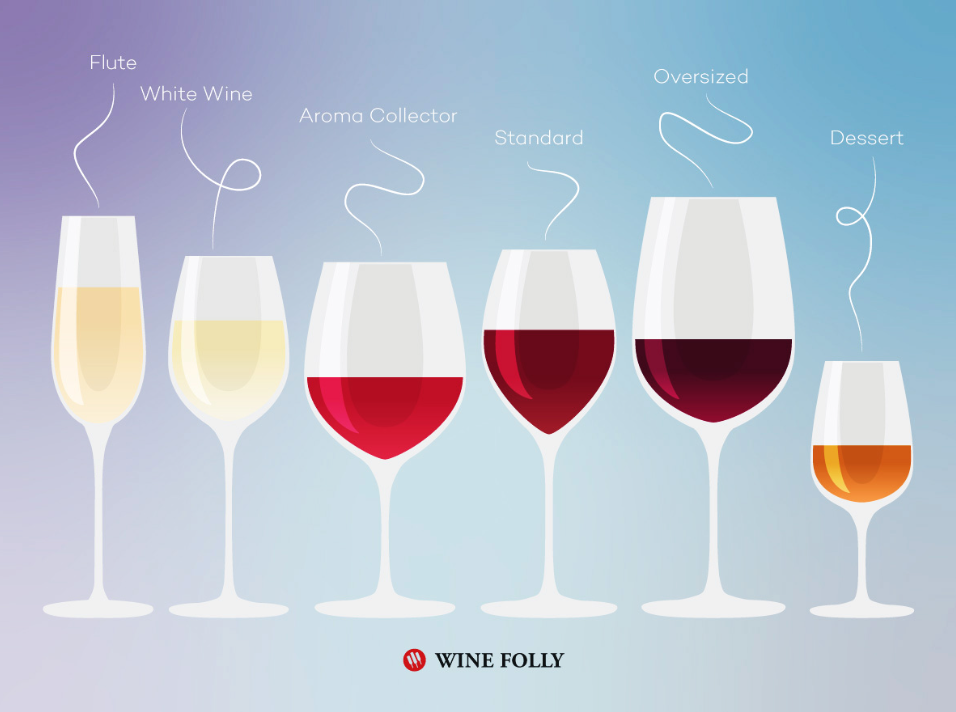
🍷 Red Wine Glass vs White Wine Glass
One of the most noticeable differences in wine glasses is between red and white wine glasses.
Red Wine Glasses
Red wines typically benefit from:
- larger bowls
- more surface area
This allows the wine to breathe and soften, especially for wines with higher tannins such as Cabernet Sauvignon or Shiraz.
The larger bowl also helps to release deeper, more complex aromas — dark fruits, spice, oak, and earthy notes.
White Wine Glasses
White wines are usually served in:
- smaller bowls
- narrower openings
This helps to:
- preserve freshness
- maintain cooler temperature
- highlight delicate aromas
White wines often rely on more subtle characteristics — citrus, floral notes, and crisp acidity — which are better preserved in a more compact glass.
🍷 Does It Really Make a Difference?
The difference may not always be dramatic, especially for casual drinking.
However, when it comes to premium wines, the impact becomes much more noticeable.
A high-quality wine is crafted with layers of complexity. The right glass allows those layers to be expressed more clearly.
Using the wrong glass can:
- mute aromas
- flatten flavours
- reduce the overall experience
In contrast, the right glass can:
- create a more refined and enjoyable tasting experience
- enhance aroma intensity
- improve balance
🧠 The Psychological Element
Beyond the technical aspects, there is also a psychological component.
A well-designed glass elevates the entire experience.
The feel of the glass in your hand, the way the wine sits in the bowl, the elegance of the presentation — all of these contribute to how you perceive the wine.
Drinking from a proper wine glass encourages you to:
- slow down
- observe
- savour
It transforms wine from something you simply drink into something you experience.
🍷 Do You Need Different Glasses for Every Wine?
This is a common question.
There are many specialised glasses designed for specific grape varietals — Bordeaux glasses, Burgundy glasses, Pinot Noir glasses, and more.
While these can enhance the experience further, they are not essential for most people.
If you are starting out or prefer simplicity, a good approach I would recommend is to have just 2 types of wine glasses:
- The Bordeaux Wine Glass
- The Burgundy WIne Glass
This is more than sufficient to significantly improve your wine experience as a start.
🍷The Bordeaux Wine Glass:
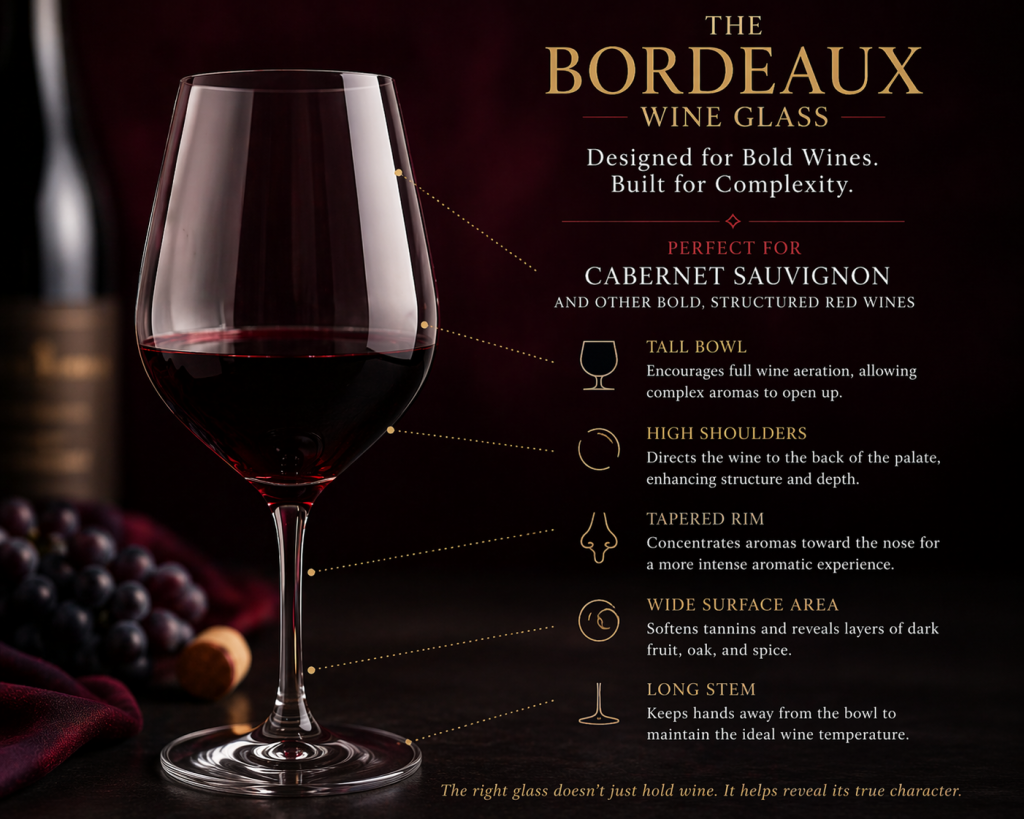
The Bordeaux wine glass is typically taller, with a broad bowl that narrows slightly toward the rim. This shape is designed specifically for full-bodied wines such as Cabernet Sauvignon and Bordeaux blends, which are known for their higher tannin structure and intensity.
The height of the glass plays an important role — it increases the distance between the wine and the nose, allowing the more volatile alcohol vapours and sharper tannin aromas to dissipate slightly before reaching your senses. This results in a smoother, more balanced aromatic experience, reducing the perception of harshness while allowing deeper notes like blackcurrant, cedar, and spice to come through more clearly.
In addition, the moderately wide bowl encourages controlled oxygen exposure, helping the wine open up gradually without overwhelming the palate.
From an evaporation perspective, the Bordeaux glass is designed for moderate aeration. The surface area is sufficient to allow aromatic compounds to develop, but not so wide that the wine loses structure too quickly. This slower rate of evaporation helps preserve the wine’s backbone — its tannins, body, and depth — while still enhancing complexity over time.
The slightly tapered rim further concentrates these aromas, directing them toward the nose in a more focused manner. Altogether, the design supports bold wines by softening their edges while maintaining their power and character.
🍷The Burgundy WIne Glass:
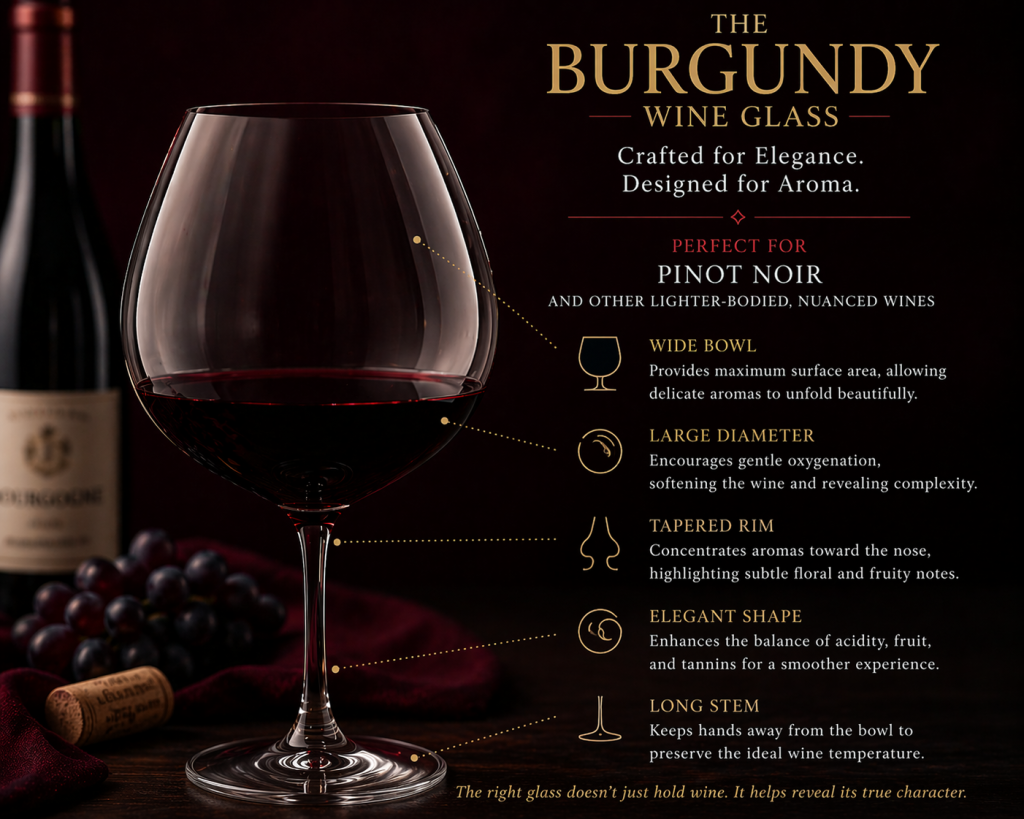
In contrast, the Burgundy wine glass features a much wider, rounder bowl with a larger diameter, specifically suited for lighter-bodied, more delicate wines such as Pinot Noir. These wines rely heavily on nuanced aromas — floral, red fruit, and subtle earthy notes — rather than sheer intensity.
The expansive bowl provides a greater surface area, allowing for more vigorous swirling and increased contact between the wine and oxygen. This accelerates the release of aromatic compounds, helping the wine “open up” more fully and express its complexity.
Unlike the Bordeaux glass, which moderates intensity, the Burgundy glass amplifies it — bringing forward delicate layers that might otherwise remain hidden.
The rate of evaporation in a Burgundy glass is noticeably higher due to its wider surface area. This faster evaporation encourages the rapid release of volatile aroma compounds, which is ideal for wines that are more aromatic but less structurally intense.
The gently tapered rim then helps to gather and channel these aromas toward the nose, enhancing the perception of elegance and balance. Rather than softening the wine, the Burgundy glass is designed to expand and reveal — allowing lighter wines to show their full aromatic potential in a way that feels expressive, refined, and complete.
🎯 A Practical Perspective
At Wine Savoury, the focus is not on having the perfect setup, but on creating a better experience.
The goal is not to complicate wine, but to enhance it.
If you are enjoying a casual glass of wine at home, any clean glass will do.
But when you are exploring premium wines — especially in a shared tasting setting — the right glass can make a meaningful difference.
It allows you to appreciate the wine more fully and to experience what makes it special.
🍷 Bringing It All Together
So, does the shape of a wine glass matter?
Yes — but not in a way that should intimidate or overwhelm.
It matters because it enhances what is already there.
It helps you experience the wine more clearly, more fully, and more enjoyably.
And ultimately, that is what wine is about.
Not just drinking, but savouring.
🍷 Final Thought
As you continue your wine journey, you will begin to notice these small details — the glass, the aroma, the texture, the finish.
Each element contributes to the overall experience.
And when everything comes together — the wine, the setting, the company — that is when wine becomes something truly memorable.
At Wine Savoury, our tasting experiences are designed to go beyond the wine itself — including how the right glass can transform what you taste and smell. These sessions offer a rare opportunity to compare and savour wines in a more refined and meaningful way.
Because great wine deserves to be experienced, not just enjoyed.