The Ultimate 3 Signature Wine and Cheese Pairing
There’s a quiet elegance in pairing red wine with the right cheese — a balance of flavour, texture, and experience that turns a simple tasting into something far more memorable.
Yet for many, wine and cheese can feel confusing or even intimidating. Which cheese works best? Why do certain combinations taste better together? And how do you create a pairing that actually feels intentional rather than random?
The truth is, great pairing doesn’t require complexity — it requires structure.
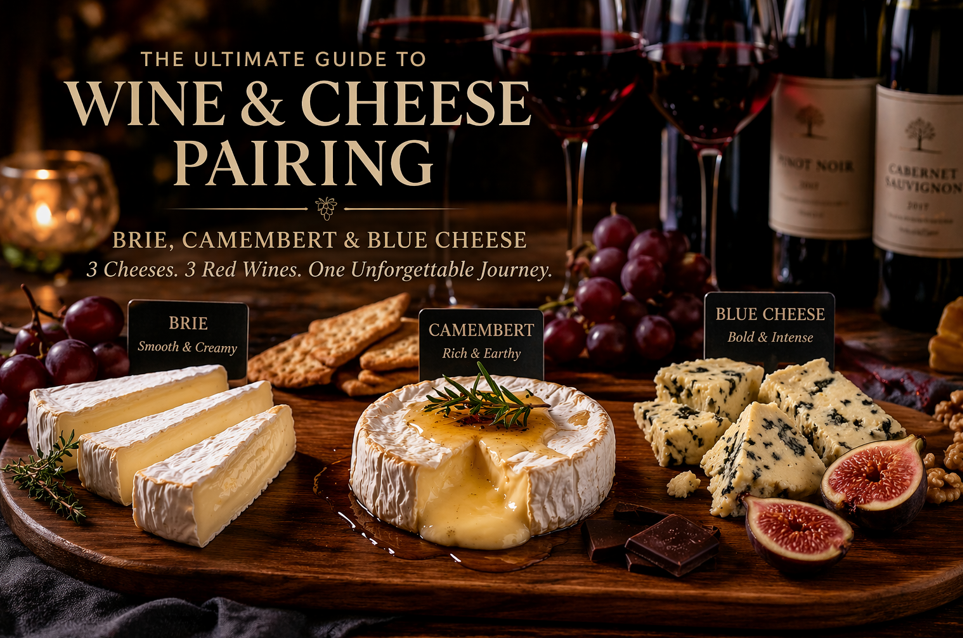
In this guide, we explore three classic cheeses — Brie, Camembert, and Blue Cheese — each carefully paired with red wines to create a natural progression from smooth and comforting to bold and expressive. Together, they form a simple yet powerful journey that allows you to not only enjoy wine, but truly understand it.
Whether you’re new to wine or looking to elevate your tasting experience, this is a pairing framework that consistently works — and leaves a lasting impression.
🧀 1) Brie — The Gentle Introduction
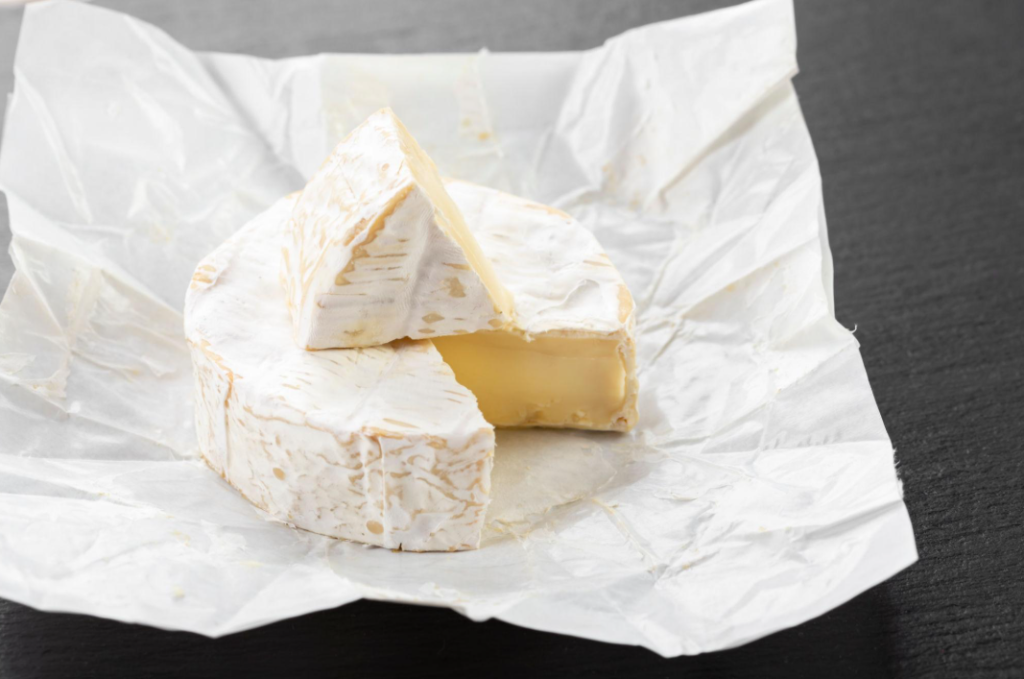
Brie is often called the “Queen of Cheeses”, and for good reason. Originating from France, this soft cheese is known for its delicate white rind and luxuriously creamy interior. At first glance, it looks simple — but once you taste it, you’ll understand why it has remained one of the most loved cheeses in the world.
What makes Brie so special is its approachability.
Unlike stronger cheeses, Brie doesn’t overwhelm the palate. Its flavour is mild, buttery, and slightly nutty, with a smooth, almost silky texture that melts easily in the mouth. This makes it an ideal starting point for anyone new to cheese — and more importantly, the perfect introduction to wine pairing.
The outer rind, known as a bloomy rind, is completely edible and adds a subtle earthy note that balances the richness inside. When served at room temperature, Brie becomes even softer and more aromatic, enhancing its overall experience.
From a pairing perspective, Brie plays a very important role. When enjoyed with red wine — especially lighter styles like Pinot Noir or soft Merlot — its creamy texture helps to soften tannins, making the wine feel smoother and less harsh. This creates an immediate sense of comfort for the drinker.
This is why Brie is often used as the first step in a wine journey.
It relaxes the palate. It builds confidence. It removes the intimidation that many people feel when approaching wine for the first time.
Beyond pairing, Brie also carries a strong social element. It’s the kind of cheese that encourages sharing. Its soft texture makes it easy to spread on crackers, pair with fruits like grapes, or drizzle with honey for a slightly sweet contrast.
In a curated experience like Wine Savoury, Brie sets the tone. It signals to your guests that this is not about complexity or rules — it’s about enjoyment and discovery.
In many ways, Brie is not just a cheese. It’s an invitation.
🧀 2) Camembert — The Rich Heart of the Experience
At first glance, Camembert looks very similar to Brie. Both are soft cheeses with a white rind and creamy interior. But once you taste Camembert, you’ll quickly realise — this is a completely different experience.
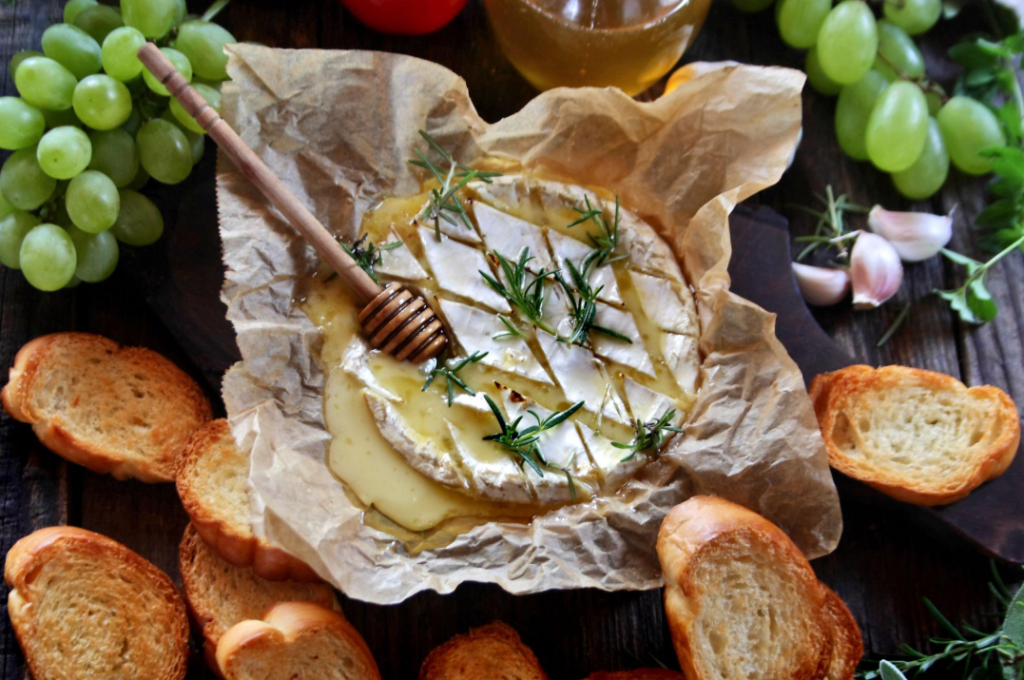
Camembert is deeper, richer, and more expressive.
Originating from Normandy, France, Camembert has a more pronounced flavour profile. While Brie is mild and buttery, Camembert introduces earthy, mushroom-like notes that give it greater complexity. Its aroma is stronger, and its character is more defined.
The texture is where Camembert truly shines.
When perfectly ripened — or gently warmed — the interior becomes incredibly soft, almost oozing and velvety, creating a luxurious mouthfeel that feels indulgent and satisfying. This alone elevates it from a simple cheese to a centerpiece.
In wine pairing, Camembert serves as the bridge between light and bold.
When paired with medium-bodied red wines like Merlot or Grenache, its richness enhances the wine’s fruitiness while its earthy undertones complement deeper flavour notes. The result is a more layered and engaging tasting experience.
This is the stage where people begin to notice.
They start asking questions. They begin comparing flavours. They become more present in the experience.
Camembert creates that moment of curiosity and engagement.
From a presentation perspective, Camembert also offers versatility. It can be served fresh, at room temperature, or even baked with honey and herbs — a simple upgrade that dramatically enhances both flavour and visual appeal.
In a curated tasting journey, Camembert represents the core of the experience.
It’s where comfort transitions into discovery. Where enjoyment becomes understanding.
If Brie is the introduction, Camembert is the conversation.
🧀 3) Blue Cheese — The Bold Finale
Blue cheese is, without a doubt, the most polarising of the three — and also the most unforgettable.
Recognisable by its distinctive blue or green veins, blue cheese is intentionally aged with specific mould cultures that create its bold flavour and aroma. For some, it’s love at first bite. For others, it takes a moment.
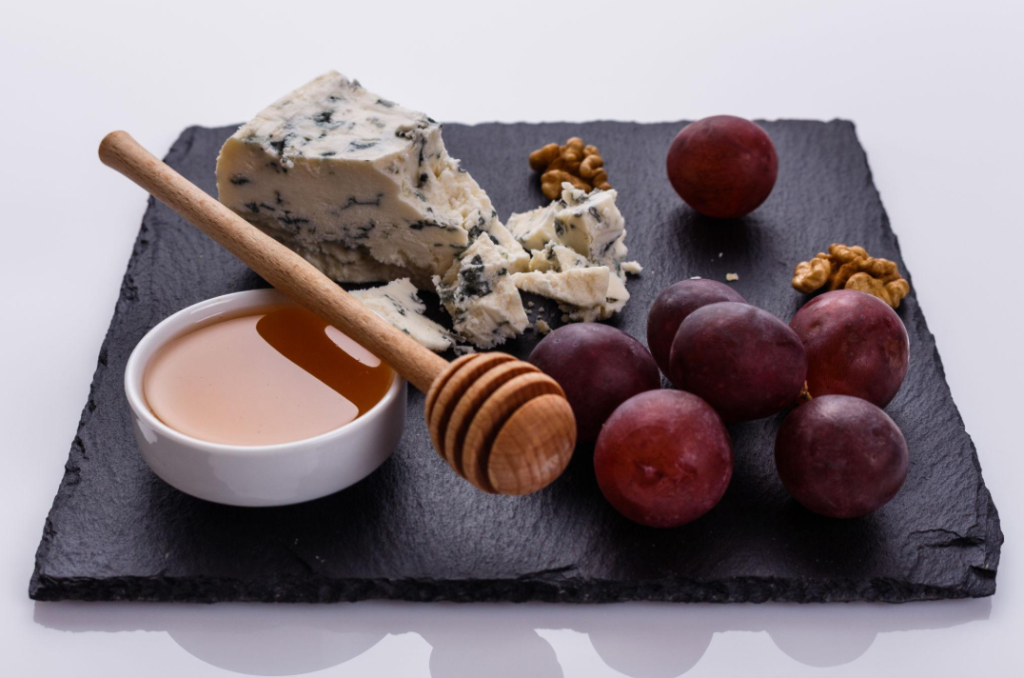
But when paired correctly, it becomes transformative.
Blue cheese is known for its intensity — salty, tangy, slightly sharp, and deeply savoury. Its aroma can be strong, and its flavour lingers on the palate. Yet, beneath that boldness lies a creamy texture that plays a crucial role in pairing.
When enjoyed with full-bodied red wines like Cabernet Sauvignon or Shiraz, something remarkable happens.
The saltiness of the cheese reduces the perception of bitterness in the wine, while its richness softens the tannins. At the same time, the wine’s fruitiness balances the sharpness of the cheese.
This creates a powerful contrast — and contrast is what makes this pairing exciting.
This is the moment where the experience peaks.
Guests often react with surprise. Some hesitate before trying it. But once they do, many discover a completely new appreciation for both the wine and the cheese.
Blue cheese challenges expectations.
And that’s exactly why it works so well as the finale.
From a presentation standpoint, blue cheese pairs beautifully with elements like dried figs or dark chocolate. These additions enhance the contrast and create a more rounded tasting experience.
In a guided journey like Wine Savoury, blue cheese represents the moment of bold discovery.
It’s not just about liking it or not. It’s about experiencing something different, something memorable.
Because in the end, people may forget what they tasted first — but they will always remember how it ended.
And blue cheese ensures it ends with impact.
🍷🧀 The Pairing Effect (A Little Secret)
Most people think wine and cheese are simply enjoyed side by side.
But the real magic happens when they are experienced together.
When a small bite of cheese meets a sip of wine, something unexpected happens — the flavours begin to transform. A wine that felt bold can suddenly become smoother. Hidden notes start to appear. The entire experience changes in a way that surprises most people.
It’s subtle, but once you notice it, you can’t unsee it.
This is what we call the pairing effect — and it’s the difference between just drinking wine… and truly experiencing it.
At Wine Savoury, we guide you through this transformation step by step — so you don’t just taste the wine, you understand it.
🍷 And once you experience it, every glass of wine will never feel the same again.
🧠 Final Thought
At its core, wine and cheese pairing is not about rules or perfection — it’s about creating moments that feel intentional, enjoyable, and memorable.
By moving from the gentle creaminess of Brie, through the rich depth of Camembert, and finishing with the bold intensity of blue cheese, you create more than just a tasting — you create a journey. One that engages the senses, sparks curiosity, and brings people together.
And perhaps that’s the real beauty of it.
Because long after the last glass is poured, what people remember isn’t just the wine or the cheese — it’s how the experience made them feel.
If you’re ready to experience this for yourself, there’s always a seat waiting at the next Wine Savoury session.