🍷 A Simple Way to Describe Wine Like a Pro
For many people, enjoying wine is easy.
Describing it, however, is a different story.
Here’s a simple 4 tips approach you can use to start describing wine like a pro.
You may have experienced this before — you take a sip of wine, you know you like it (or don’t), but when someone asks, “What do you think?”, you’re not quite sure what to say.
Is it fruity? Smooth? Strong?
Or you may have heard others describe wine using terms like “notes of blackberry, hints of oak, with a structured finish” — and wondered how they came up with that.
The truth is, describing wine is not about being an expert.
It’s about having a simple way to express what you’re already experiencing.
🧠 The Secret: Keep It Simple
You don’t need a long list of complicated vocabulary.
In fact, most wine descriptions can be broken down into just a few simple elements:
- flavour
- body
- tannin (for red wines)
- acidity
Once you understand these, describing wine becomes much more natural.
🍇 1. Start with Flavour
This is the easiest place to begin.
Ask yourself:
👉 What does this remind me of?
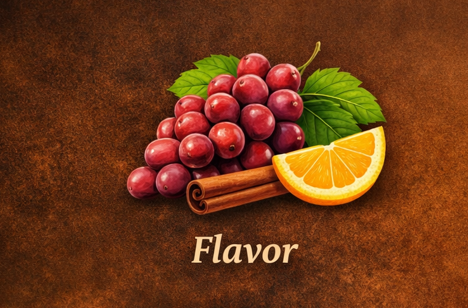
Most wines fall into familiar flavour categories:
- Fruits — cherry, blackberry, plum, citrus
- Spice — pepper, cinnamon
- Other notes — chocolate, vanilla, earthy tones
You don’t need to be exact.
If a wine reminds you of dark fruits, you can simply say:
“I’m getting some dark fruit flavours, like blackberry.”
That’s already a great description.
🍷 2. Understand the Body
Body refers to how the wine feels in your mouth.
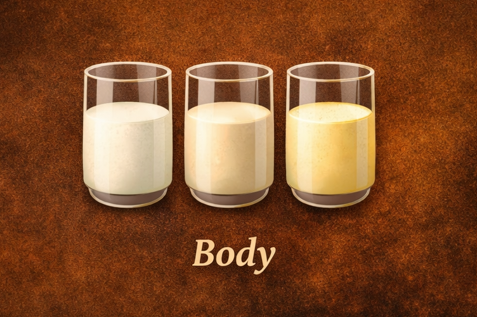
A simple way to think about it is:
👉 Compare it to milk.
- Light-bodied → like skim milk
- Medium-bodied → like regular milk
- Full-bodied → like cream
For example:
- Pinot Noir → usually lighter
- Cabernet Sauvignon → fuller and richer
So you could say:
“This wine feels quite full-bodied and rich.”
🍷 3. Notice the Tannin (Red Wines)
Tannins are what create that drying sensation in your mouth, especially on your gums.
Think about the feeling when you drink strong tea — that slight dryness.
That’s similar to tannin.
- Low tannin → smooth, soft
- High tannin → dry, structured
For example:
“It has a bit of dryness, so I think the tannins are quite noticeable.”
You don’t need to be technical — just describe the feeling.
🍋 4. Pay Attention to Acidity
Acidity is what gives wine its freshness.
It’s the crisp, lively sensation that makes your mouth water slightly.
- High acidity → fresh, vibrant
- Low acidity → softer, rounder
White wines like Sauvignon Blanc tend to be more acidic, while some reds are smoother.
You could say:
“It feels quite fresh and lively — I think the acidity is quite high.”
🧩 Putting It All Together
Now here’s where it becomes powerful.
You simply combine these elements into one sentence.
For example:
“This wine is medium-bodied with some dark fruit flavours, smooth tannins, and a nice fresh finish.”
That’s it.
Putting all these together, you will already learn how to taste wine a like a pro. And you’ve just described wine like a pro.
🍷 A Real Example
Let’s say you’re tasting a Cabernet Sauvignon.
You might say:
“This is a full-bodied wine with notes of blackcurrant and a bit of spice. The tannins are quite firm, but it finishes smoothly.”
Or for a Pinot Noir:
“This one is lighter, with red fruit flavours like cherry. It’s quite smooth and easy to drink.”
Notice how simple that is.
🧠 The Most Important Thing
There is no “perfect” description.
Wine is subjective.
What you taste and smell may be slightly different from someone else — and that’s completely fine.
The goal is not to be correct.
The goal is to express your experience.
🍷 Why This Matters
When you can describe wine:
- you become more confident
- you enjoy the experience more
- you start to notice differences between wines
Instead of just saying “I like it”, you begin to understand why you like it.
And that’s when wine becomes much more interesting.
🍷 Bringing It to Life
At Wine Savoury, this is something we explore during our tasting sessions.
Not in a complicated or technical way — but in a simple, guided approach that helps you notice and describe what you’re experiencing.
When you taste wines side by side and discuss them with others, everything becomes clearer.
You realise:
👉 it’s not about expertise
👉 it’s about awareness
🍷 Final Thought
Describing wine is not about memorising terms.
It’s about paying attention.
The next time you have a glass of wine, try this:
- notice the flavour
- feel the body
- observe the texture
- describe it in your own words
You might be surprised at how naturally it comes to you.
If you’re curious to experience this in a more interactive way, Wine Savoury offers guided sessions where you can explore and discuss wines in a relaxed and enjoyable setting.
Because wine is not just meant to be drunk.
It’s meant to be savoured.