Old World vs New World Wines
A refined guide to understanding two philosophies of winemaking
There comes a moment in every wine journey when you begin to notice something subtle—but significant.
Two wines made from the same grape.
Two bottles, similar in price.
Yet, entirely different in character.
One feels restrained, structured, almost poetic.
The other—bold, expressive, and immediately inviting.
This contrast is not случайность. It reflects one of the most fundamental distinctions in the world of wine:
Old World vs New World.
Understanding this difference is not about choosing one over the other. It is about deepening your appreciation—learning to recognise not just what is in your glass, but where it comes from, and why it tastes the way it does.
The Old World: Tradition, Terroir, and Time
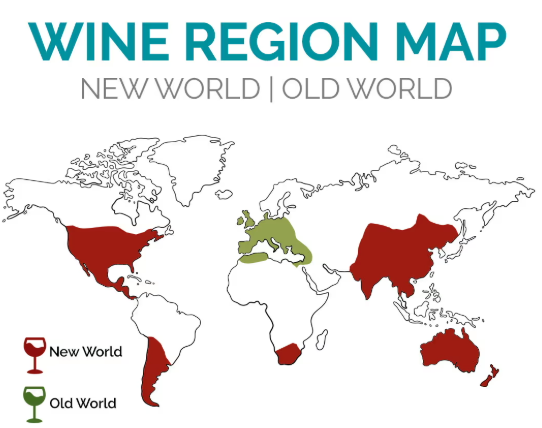
The term “Old World” refers to the historic wine-producing regions of Europe.
Countries such as France, Italy, Spain, and Germany have been making wine for centuries—some for over a thousand years. In these regions, winemaking is not merely an industry. It is heritage.
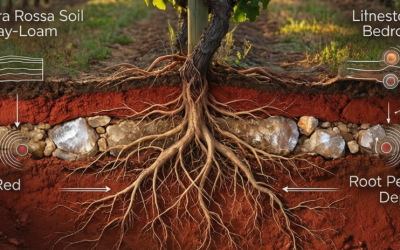
Old World wines are shaped by a philosophy that places terroir above all else.
The goal is not to impose style, but to express the land:
- The soil
- The climate
- The subtle nuances of each vineyard
As a result, Old World wines tend to be:
- More restrained in fruit
- Higher in acidity
- Lower in alcohol
- Structured and complex
They often reveal themselves slowly, evolving in the glass rather than announcing themselves immediately.
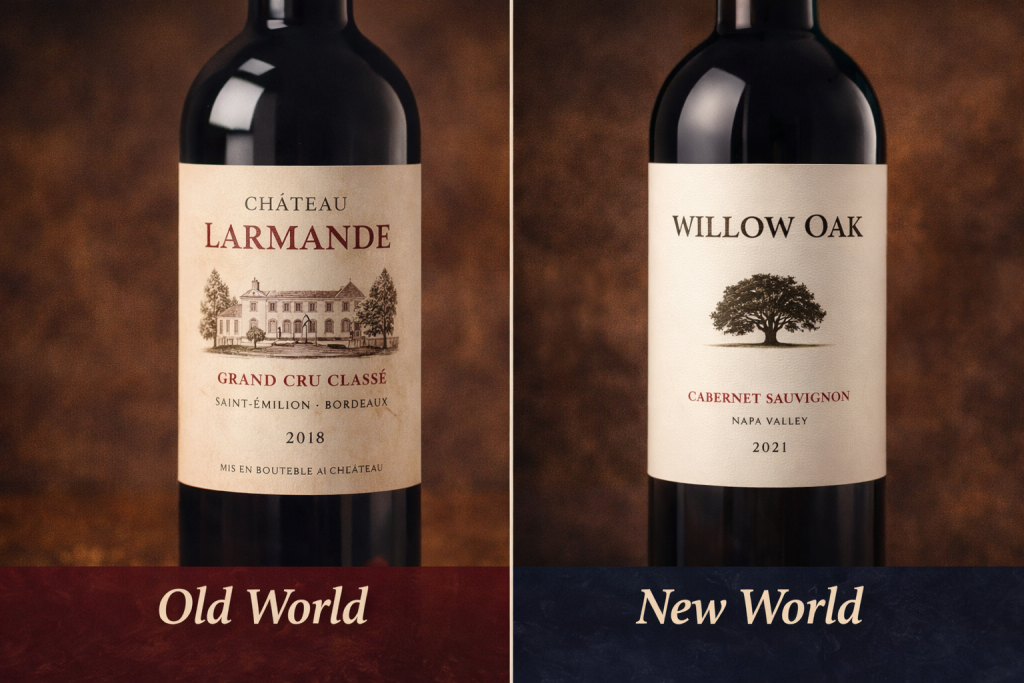
Even the way they are labeled reflects this tradition. Instead of highlighting the grape variety, Old World wines typically emphasize region—because the place is the identity.
To enjoy an Old World wine is to experience history, culture, and a sense of place—quietly layered within each sip.
The New World: Innovation, Expression, and Approachability
In contrast, “New World” wines come from regions outside Europe—places where winemaking arrived later, but evolved rapidly.
Think of countries such as Australia, the United States, Chile, Argentina, and New Zealand.
Freed from centuries of strict tradition, New World producers embraced a different philosophy:
Make wine that is expressive, accessible, and enjoyable from the very first sip.
Here, the winemaker’s influence is more visible. Techniques, experimentation, and modern technology are used to shape wines that are:
- Fruit-forward and vibrant
- Fuller-bodied
- Higher in alcohol
- Softer in structure
These wines often deliver immediate pleasure—rich aromas, ripe flavours, and a smooth, rounded finish.
Labeling is also more straightforward. You will often see the grape variety clearly stated—Cabernet Sauvignon, Chardonnay, Pinot Noir—making it easier for newcomers to navigate.
New World wines invite you in. They are confident, open, and designed to be enjoyed without hesitation.
A Tale of Two Styles
To truly understand the difference, it helps to imagine a simple comparison.
A Pinot Noir from Burgundy (Old World) might be:
- Light-bodied
- Earthy, with notes of forest floor and red berries
- Elegant, with a lingering, subtle finish
A Pinot Noir from California (New World), on the other hand, may present:
- Riper fruit flavours—cherry, raspberry
- A fuller body
- A smoother, more immediate expression
Neither is better. They are simply different interpretations of the same grape—shaped by philosophy, climate, and intent.
Climate and Its Influence
Another key distinction lies in climate.
Old World regions generally have cooler climates, which contribute to:
- Higher acidity
- More delicate fruit expressions
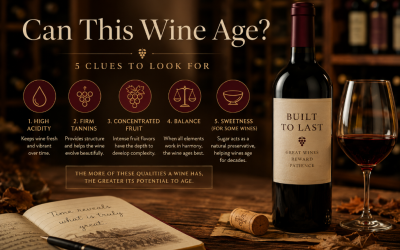
- Greater aging potential
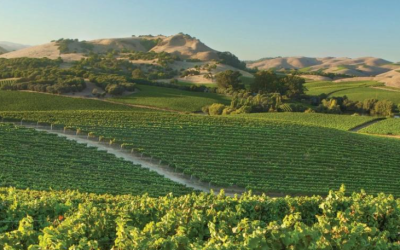
New World regions often enjoy warmer climates, leading to:
- Riper grapes
- Higher sugar (and therefore higher alcohol)
- Bolder, more pronounced flavours
This is why New World wines often feel more generous and fruit-driven, while Old World wines feel more structured and nuanced.
Which Should You Choose?
The beauty of wine lies in its diversity—and your preference may change depending on the moment.
If you are seeking:
- Elegance
- Subtlety
- A wine that unfolds slowly over conversation
You may find yourself drawn to the Old World.
If you prefer:
- Bold flavours
- Immediate enjoyment
- A wine that is expressive and approachable
The New World may speak more to you.
But perhaps the most refined approach is not to choose at all.
Instead, allow both styles to coexist in your journey.
Because understanding the contrast is what elevates your appreciation.
Beyond Geography: A Matter of Philosophy
At its core, Old World vs New World is not just about location.
It is about mindset.
Old World winemaking asks:
“How do we honour the land?”
New World winemaking asks:
“How do we express the wine?”
Both are valid. Both are beautiful.
And when experienced side by side, they offer a richer, more complete understanding of wine itself.
A Final Reflection
The next time you select a bottle, pause for a moment.
Look beyond the label.
Consider its origin.
Think about the philosophy behind it.
Because in doing so, you are no longer just drinking wine.
You are engaging with a story—one shaped by history or innovation, restraint or expression, tradition or creativity.
And that awareness transforms the experience entirely.
Discover Premium Wines the Smarter Way
If you enjoyed this article and want to explore exceptional premium wines without spending hundreds on a single bottle, download our free guide below.